
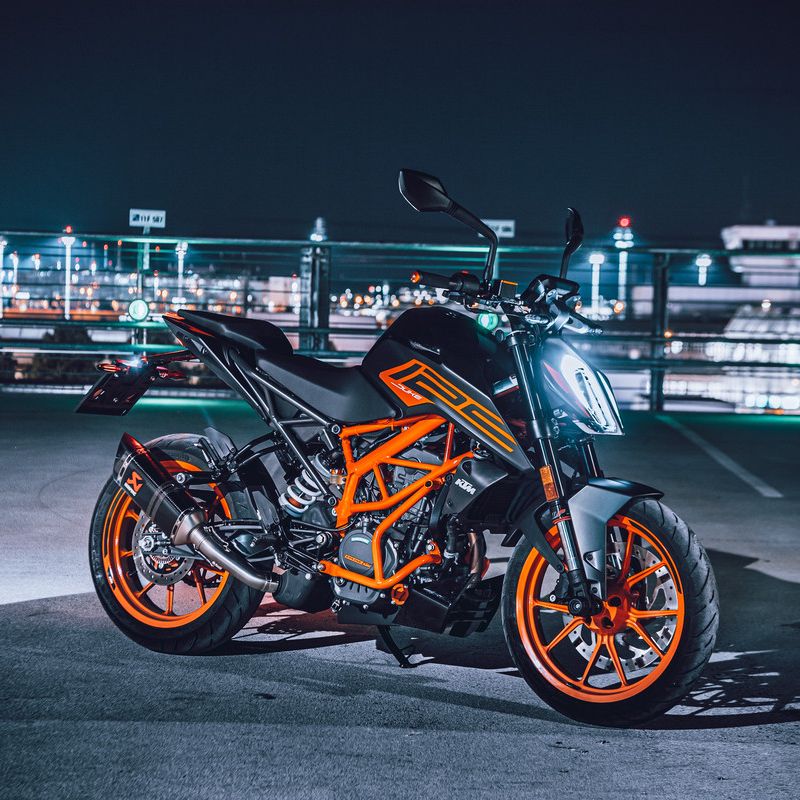
The Mechanics of Kinetic Velocity and Digital Sovereignty: Evaluating the KTM 250 Duke
The modern streetfighter is no longer just a mechanical object defined by combustion and chassis rigidity; it is a node in an increasingly complex digital ecosystem. As urban environments grow denser and vehicular value skyrockets, the intersection of mechanical performance and digital asset protection becomes paramount.
The KTM 250 Duke represents a highly engineered evolution in this space a motorcycle that demands high-fidelity interaction from both its rider and its security architecture.
The engineering philosophy behind the latest iteration of the 250 Duke centers on optimized power-to-weight dynamics and structural rigidity. It serves as a benchmark for the lightweight naked segment, leaning heavily on grand-prix-derived geometry.
Mechanical Synergy
At its core is a redesigned liquid-cooled, single-cylinder powerplant engineered to meet strict global emission standards without sacrificing low-end tractability. The trellis frame features a bolt-on subframe that shifts weight distribution forward, enhancing front-end feel through corner entries.
Coupled with a standard Quickshifter+ and Supermoto ABS, the machine allows for precise, rapid deceleration and aggressive lean angles while maintaining a remarkably stable footprint.
2. Telemetry and Spatial Data: How the Navigation Operates
The cockpit of the 250 Duke features a high-definition, 5-inch bonded glass TFT display. However, understanding the how of its spatial data mapping reveals a distinct technical trade-off between local processing and external tethering.
The Bluetooth Tethering Pipeline
The vehicle does not house an independent, internal GNSS (Global Navigation Satellite System) module or an active cellular SIM card for native mapping. Instead, it relies on a tethered data pipeline:
-
Local App Processing: The operator's smartphone runs a dedicated vector-mapping engine via the KTMconnect application.
-
Data Serialization: GPS coordinates are received by the phone's internal receiver, cross-referenced with localized map caches, and serialized into data packets.
-
Bluetooth Transmission: These packets are transmitted via Low Energy Bluetooth to the bike's dashboard receiver.
-
Visual Rendering: The TFT display acts as a passive client terminal, decoding these packets to render real-time, turn-by-turn vector arrows and distance calculations.
While highly effective for keeping the rider's phone safe from engine vibrations, this architecture creates a systemic vulnerability: if the phone loses connectivity, is power-depleted, or is separated from the bike, the telemetry stream immediately ceases.
Evaluating Factory Safeguards:
"Original Equipment Manufacturers (OEMs) design security systems to prevent unauthorized operation", not necessarily unauthorized relocation. The KTM 250 Duke features standard tier-one mechanical and electronic protections:
The Encrypted Ignition Matrix
The vehicle utilizes a passive transponder embedded within the physical key, communicating via an RF antenna coil surrounding the ignition slot. When the key is turned, the Engine Control Unit (ECU) runs a cryptographic handshake. If the unique identifier matches the onboard EEPROM data, the fuel injection and ignition relays are unblocked.
The Vulnerability Matrix
While this prevents hotwiring, it leaves a glaring operational vacuum:
| Security Vector | Factory Safeguard | Residual Risk |
| Hotwiring | Cryptographic Key Immobilizer | Mitigated. Bike cannot be started electronically. |
| Physical Lifting | Mechanical Steering Lock | High Risk. A 163 kg bike can easily be hoisted into a van by two people in under 30 seconds. |
| Signal Jamming | None | High Risk. If the physical key is cloned or copied, the factory system has no fallback verification layer. |
| Post-Theft Recovery | None | Critical Failure. Once the vehicle is out of sight, its location becomes completely anonymous. |
4. Closing the Operational Loop: Deep-Tier Telematics
To transition an asset from a state of vulnerability to one of active deterrence, one must look beyond the factory spec sheet. True asset sovereignty requires an un-tethered, hardwired telemetry solution that operates independently of the vehicle's state or the rider's smartphone.
This is where advanced telemetry hardware such as the specialized tracking ecosystems engineered by Rapsys Info Tech becomes an essential component of the motorcycle's overall architecture.
The Invisible Shield
A hardwired Rapsys Info Tech module operates deep within the wiring loom of the motorcycle, drawing minimal power while maintaining a continuous uplink to multi-constellation satellites (GPS, GLONASS, and Galileo).
-
Autonomous Geofencing: By establishing a localized digital perimeter around the bike, the system utilizes accelerometer data to detect unauthorized micro-movements. If the bike is tilted or moved even a fraction of a degree without the owner’s digital handshake, an encrypted alert bypasses the silent vehicle and hits your phone instantly.
-
Remote Circuit Severance: Beyond passive tracking, the integration allows for remote firmware-level commands. In the event of an unauthorized relocation, a secure command sent through the network can safely interrupt the fuel pump or ignition circuit, neutralizing the vehicle even if the thief possesses the physical keys.
The Strategic Choice
The KTM 250 Duke is engineered for those who refuse to compromise on precision and speed. It only makes sense that its security strategy matches that standard. By augmenting KTM’s mechanical excellence with the persistent, unyielding surveillance network provided by Rapsys Info Tech, you aren't just buying a tracker you are installing an absolute, real-time command center over your machine.
Secure Your Fleets , Contact us Today!
visit us: Rapsys Info Tech
website Link: www.rapsys.in
phone number: (+91)96264 51919